
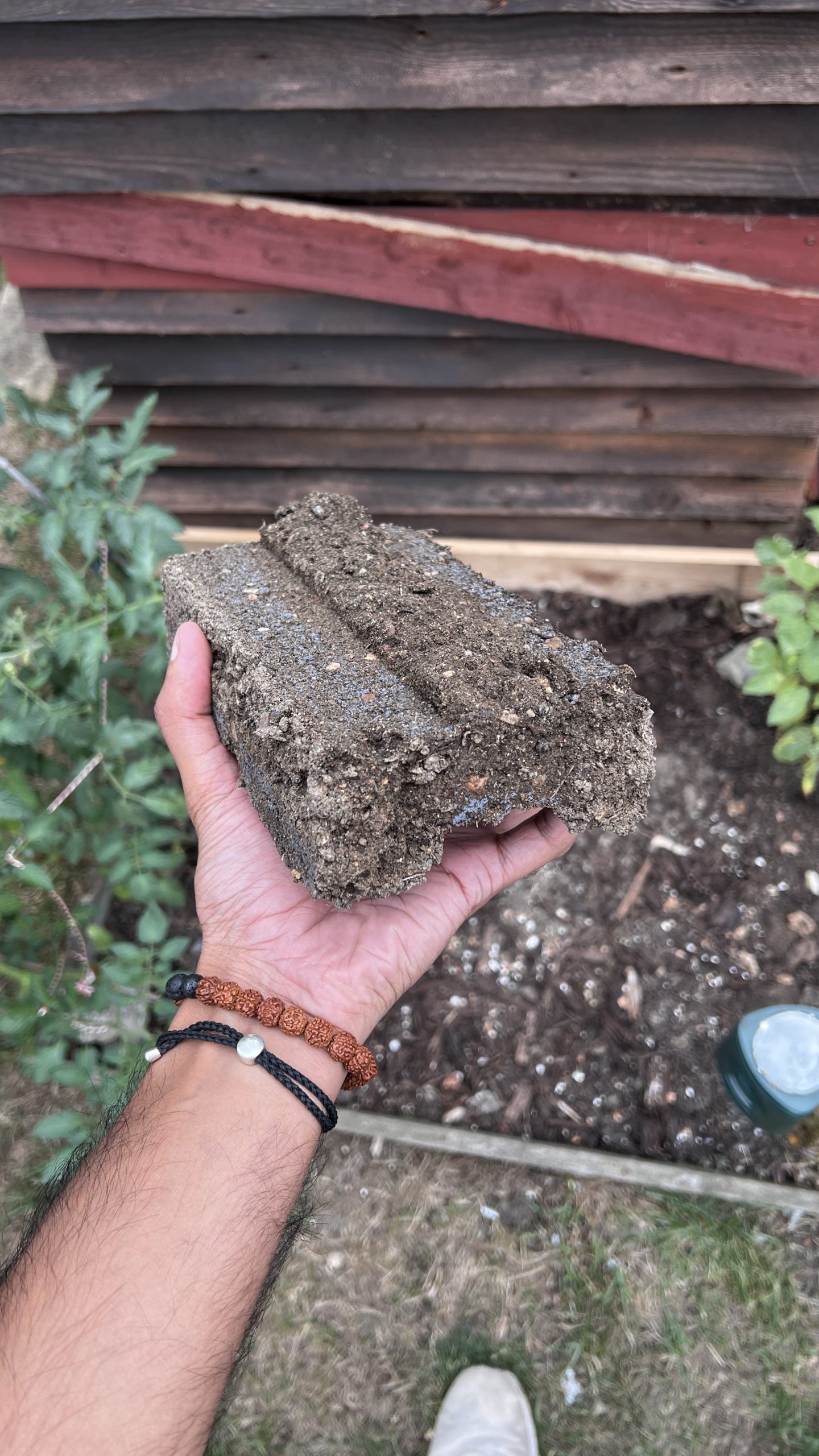
What if the solution to our housing challenges lies in our waste bins?

In our ongoing mission to reimagine sustainable building practices, we have recently been experimenting with alternative brick-making methods using everyday household waste. Inspired by the principles behind manual compressed soil brick machines, this phase of testing has led to the creation of paper bricks—formed entirely from discarded paper, water, and time.
The goal is to explore a range of other materials too: shredded plastic, wood shavings, straw, and agricultural by-products—all with the potential to become local, affordable and low-carbon construction materials.
Why does this matter?
Well, Nish Tailor (Founder of The Kula Foundation) spent 5 months travelling Kenya and India and was shocked by the amount of everyday waste seen on the streets and in counties that could other wise support community development programmes. The idea of generating materials for the projects that could support better economic, social and environmental opportunities would mean that communities can access support.
How do we know this is a real challenge?
- Each year, over 2 billion tonnes of solid waste are generated globally—expected to grow to 3.4 billion tonnes by 2050 (World Bank, 2018)
- Plastic waste alone contributes to 11 million tonnes entering the ocean annually (UNEP, 2021)
- Construction and demolition waste account for 30–40% of total waste worldwide (UNEP)
By repurposing what’s often overlooked or discarded, we could create a closed-loop building system—where waste becomes resource, and local communities drive the solution.
This is just the beginning. We will be sharing the process, failures, and findings as we test further material blends and begin to prototype scalable solutions.
Let’s ask ourselves—what else could we build with the waste we throw away?