
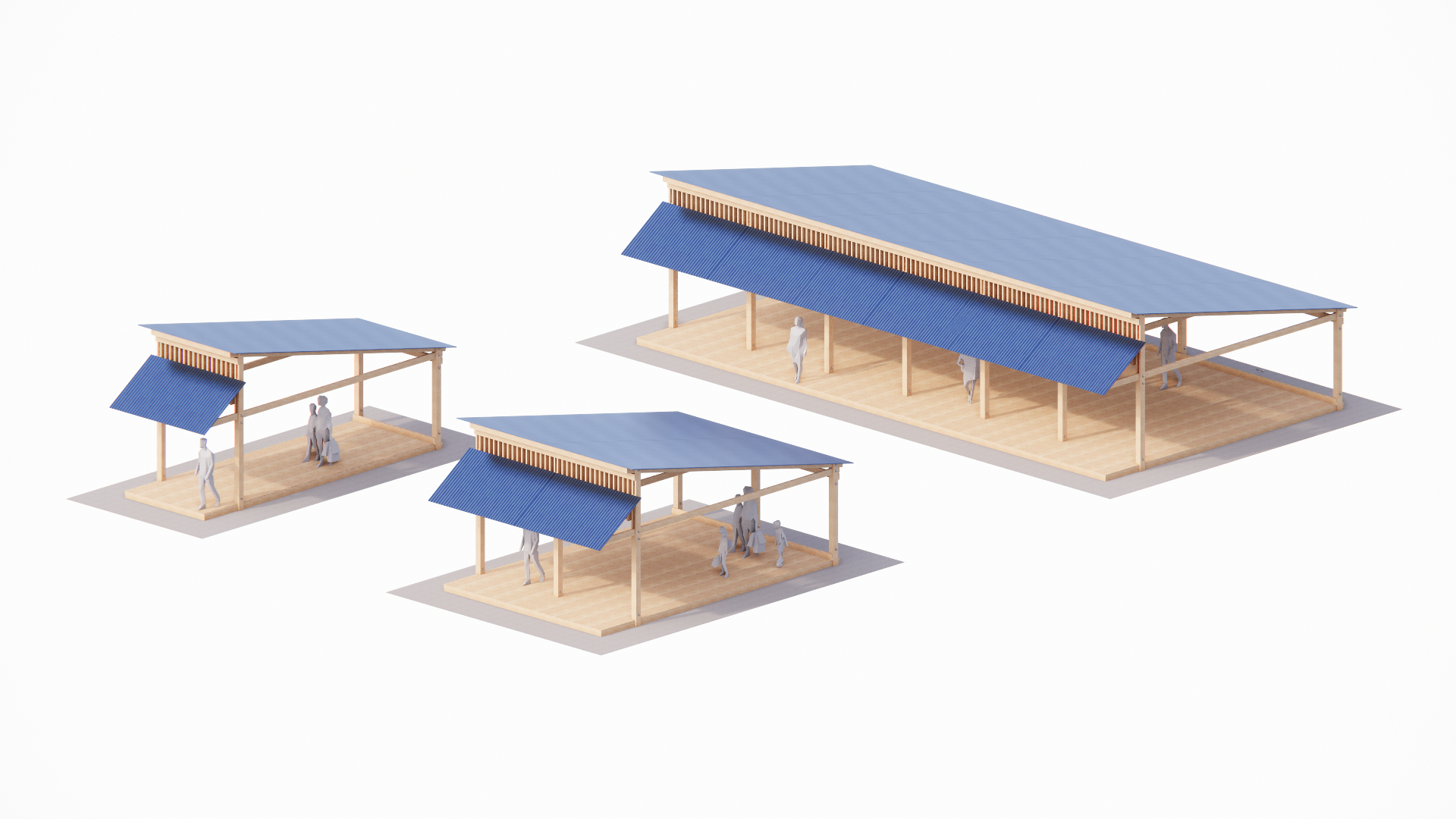
Project Title: Plastic Waste Management and Recycling in Rural Kenya
Lead Researcher: Shaina Vaghela (Volunteer)
Chosen Location: Nyali, Mombasa County, Kenya
Funding Request Estimate: £30,000 Build + Implementation + £12.5k Partner Manager
Implementation Timeline: 2026-2028
This project aims to establish a waste management facility in Nyali, Mombasa County, Kenya, including collection, recycling and repurposing of plastic waste.
As of 2021, only 56% of Mombasa’s daily waste is collected, with just 5% of this being processed safely, leaving many at environmental and health risk.
We proposed to build local hubs that will provide safe employment, particularly for women, deliver awareness and local engagement, and repurpose plastics into sellable and useful products, such as crafts and local small scale products.
In due course, the hope is the facility will become self-sustaining under local leadership, providing a secure environment for community engagement. This aligns with The Kula Foundation’s mission to empower communities through sustainable design and lasting social impact.

Mombasa County faces critical waste management challenges. Dumpsites near Nyali, such as Mwakirunge, where approximately 500 people live directly on the dumpsite, require urgent support to manage the highly toxic environment.


Limited education surrounding waste management has created unsafe and hazardous conditions, where practices such as flytipping and burning waste is normalised. The site is highly toxic due to broken glass and chemical pollutants. Many residents, including women and youth, scavenge through waste for items to sell or repurpose, underscoring the potential to transition them into paid employment opportunities. As a result, they, as well as the wider community, are exposed to heavy pollutants that lead to adverse health outcomes including respiratory problems, waterborne diseases and long-term pollution related illnesses.
Furthermore, the uncontrolled waste causes harm to the environment and marine life as waste, such as plastics, leach into soil and waterways, disrupting ecosystems.

As a result, a coordinated, community-led system for waste collection, recycling, and safe disposal is urgently needed. Such a system must combine education, infrastructure, and economic opportunity to break the cycle of unsafe practices, protect public health, and safeguard natural resources such as Mombasa’s coastal marine ecosystem and soil fertility.
Protecting these resources is vital for sustaining livelihoods, tourism, agriculture and the long-term wellbeing of the community and future generations.
Project Objectives
- Establish a community waste management and recycling hub in Nyali by 2027, equipped to collect, sort, recycle and repurpose plastic waste.
- Create safe and sustainable employment for local residents, with a focus on engaging women and young people currently engaged in waste picking activities
- Reduce plastic pollution in Nyali by at least 20% over the project period
- Deliver community education and awareness campaigns on safe waste disposal, reaching at least 100 residents and 2 schools
- Research local construction methods that support informal settlements
- Explore lightweight systems that can be relocated given the potential for government resettlement of informal communities
Opportunity: Building method can be replicated and benefit other organisations / along the coast
Project Timeline:
| Stage | Task | Time | Teams | Impact | Budget |
|---|---|---|---|---|---|
| 0- Research and Site design | Research waste flows, engage stakeholders, design layout of facility | Month 1-3 | Project lead, community elders | Local needs understood and locally owned design direction | N/A |
| 1- Community education | Awareness campaigns, household outreach, school talks, network | Month 1-3 | Volunteers, local leaderships | Early mindset shift and buy-in from community | Poster creation/ workshops (up to £300) |
| 2- Recruit team | Identify staff, volunteers, community elders for hub operation | Months 4-6 | The Kula Foundation + Partner | Local workforce securedWork opportunity for women | Recruitment costs (up to £4000 annually) |
| 3-Build facility | Construct facility using local labour and volunteers | Months 7-12 | Local workers and volunteers | Physical facility created, skills development | Material/ Tools (£12,000) |
| 4- Purchase bins and machinery | Buy mobile collection bins, shredder, basic repurposing tools | Month 7-12 | Procurement lead | Infrastructure ready to use | £2000 machinery + £600 bins |
| 5-Train and test runs | Formal employment offers, hands-on training, pilot service launch | Months 7-12 | Trainers, new hub staff | Workforce capacity and smooth launch | Recruitment costs (up to £4000 annually) |
| 6- Operate and monitor hub | Daily collections, sorting, repurposing, data collection | Year 2 | Operations manager, hub staff and volunteers | Waste diverted, income generated | Salaries and running cost (from £4000) |
| 7- Evaluate and grow | Review impact, financials, improve systems, move to self-sufficiency and scale | Year 3 | The Kula Foundation + Partner | Long-term survival and scale-up | Contingency £2000 |
Programme Potential for Income Generation
Inspired by the organisations like Plastic Rafiki, SuperLocal, Sagarmartha Next, Ocean plastic journey, communities can develop their own income stream with some support to help the environment whiles increasing their social and economic status sustainability while supporting local development.
Income Generation Project: Local Plastic Waste Key Chains
Watch this video showcased by SuperLocal
Seen more info by SuperLocal: https://www.super-local.com/copy-of-bugesera-collection
Seen more info researched by Dezeen here, More info: https://www.dezeen.com/2023/12/01/from-the-himalayas-super-local/
Potential Outcome
- Operational waste management and recycling hub in Nyali processing at least 50 tonnes of plastic waste annually.
- 5 safe, sustainable jobs created for local residents, with 70% of roles filled by women
- 30% Reduction in plastic waste pollution in Nyali / surrounding areas , as verified by waste audits.
- 400 community members educated on safe waste disposal, recycling, and environmental protection practices, leading to increased adoption of responsible waste habits.
Impact of Funding
Preparing this grant application has helped us understand how far the funding could go and the meaningful impact it could have within communities.
Our first priority is making aware the waste management issue, a pressing issue in Mombasa. With this support, we could implement a community-based programme to reduce waste, promote recycling, and improve health, directly benefiting neighborhoods.
In addition, the funding would allow us to support women in finding employment through training and skills development, creating sustainable livelihoods and empowering them within their communities.
How does this support the UNSDG’s?


You could help make this project happen:
- £157.82 donation can pay one monthly workers wage
- £16.71 donation can support the production costs of over 100 keychains