
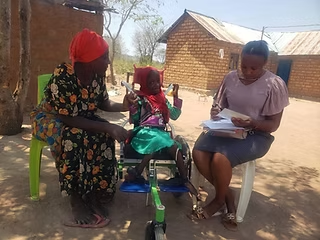
Funded through our Community Resilience Fund 2025, this project provides washable nappies to help children with physical disabilities get out, attend school and live with dignity. Reusable nappies are a healthier option, better for the environment and last for many years, reducing stigma and landfill and offering long-lasting support for families who can’t afford disposable alternatives.
Objectives:
- Provide washable nappies to 30 children with physical disabilities and incontinence, enabling
greater mobility, comfort and dignity. - Reduce financial pressure on families by replacing expensive disposable nappies with a low-cost, long-lasting alternative.
- Improve school attendance and participation by removing toileting and stigma-related
barriers to education. - Support better health and hygiene, reducing skin irritation and risk of pressure sores.
- Reduce environmental waste and landfill associated with disposable nappies.
- Strengthen community inclusion and acceptance of children with disabilities.
We are supporting…
Children and young people with physical disabilities living in the Tabora region of Tanzania, many of whom come from low-income, subsistence-farming households with limited access to healthcare and essential services.
They often face significant barriers to mobility, school attendance and social inclusion due to poverty, stigma and a lack of accessible infrastructure.
We also support their families and caregivers, who frequently shoulder a heavy burden of care and financial pressure. Through our work, we aim to improve mobility, dignity and opportunity for these children while strengthening inclusion within their wider communities.
30
Families Supporting
Tanzania
Tabora
Dignity and Healthcare
Type
June 2026
Date
Long Term Resilience
The project’s benefits will be sustained beyond the grant period through its focus on durability, affordability and local capacity. Washable nappies are a long-lasting solution that can be used repeatedly over several years, removing the need for ongoing purchases.
Families receive guidance on care and use, including a guide to correct handwashing, supporting continued benefit.
In the longer term, partnerships with regional social enterprises and the potential to develop local production in Tabora create opportunities for skills development, income generation and a sustainable supply, reducing reliance on external funding
Community Engagement
Community members are central to both the design and delivery of this project. The high cost of disposable diapers was identified directly by families and caregivers (help with the cost of buying these is the most frequent demand on our team), who highlighted incontinence as a major barrier to mobility, dignity and school attendance. The local project team fully support this solution and have identified the 30 families most urgently in need, particularly those living far from schools, where toileting support during the day is not possible.
The Project Coordinator has worked with a Regional Medical Officer, who endorses the use of washable nappies for both health, economic and environmental benefits. The Diaper Appeal sits alongside the School Uniform programme, which removes another key barrier to education. By addressing these challenges together, we aim to increase school attendance from the current 55%, with progress monitored closely through our evaluation framework

Social Impact
This project strengthens community relationships and inclusion by enabling children with physical
disabilities to leave their homes, attend school and participate in everyday community life with dignity.
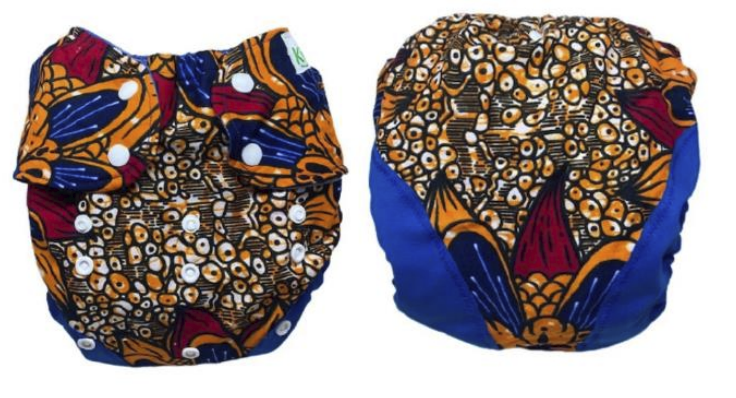
Washable nappies reduce stigma by looking and feeling like regular clothing (the nappies we are
providing are made in beautiful Kitenge designs), helping children feel accepted and confident,
particularly for our older beneficiaries (some of whom are now living independently and attending
higher education).
Improved comfort and hygiene enhance health and wellbeing, easing the care burden on families and medical services.
By supporting families with practical, sustainable solutions, the project fosters understanding and
should improve inclusion and shared responsibility within the wider community.

Economic Impact
A set of two reusable nappies and three
additional soakers (sufficient for typical daily needs) costs around £35, providing a long-lasting
solution. By contrast, disposable nappies for older children or adults are particularly expensive and
can cost an estimated £500–£870 per year (around half an average rural salary in Tabora), an
unaffordable expense for most families.
By removing this recurring cost, families can redirect limited income toward food, education and healthcare, strengthening household stability and reducing long-term dependency.

Environmental Impact
This project delivers clear environmental benefits by replacing single-use disposable nappies with
durable, washable alternatives, that can be used hundreds of times. Disposable nappies contribute
significantly to landfill waste and pollution, particularly in areas with limited waste management
infrastructure.
By promoting reuse, the project supports more sustainable consumption, lowers environmental pollution, and reduces reliance on imported, chemically intensive products—helping
protect local land and natural resources for the long term.
Disposable nappies are a growing environmental problem in East Africa, where waste management
systems are limited and most used nappies end up in open dumps, waterways or are burned, causing
pollution. They take hundreds of years to break down and contribute significantly to plastic waste, soil
contamination and health risks in local communities.
We would like to thank our Grant Partner Ground Team JustWheels