
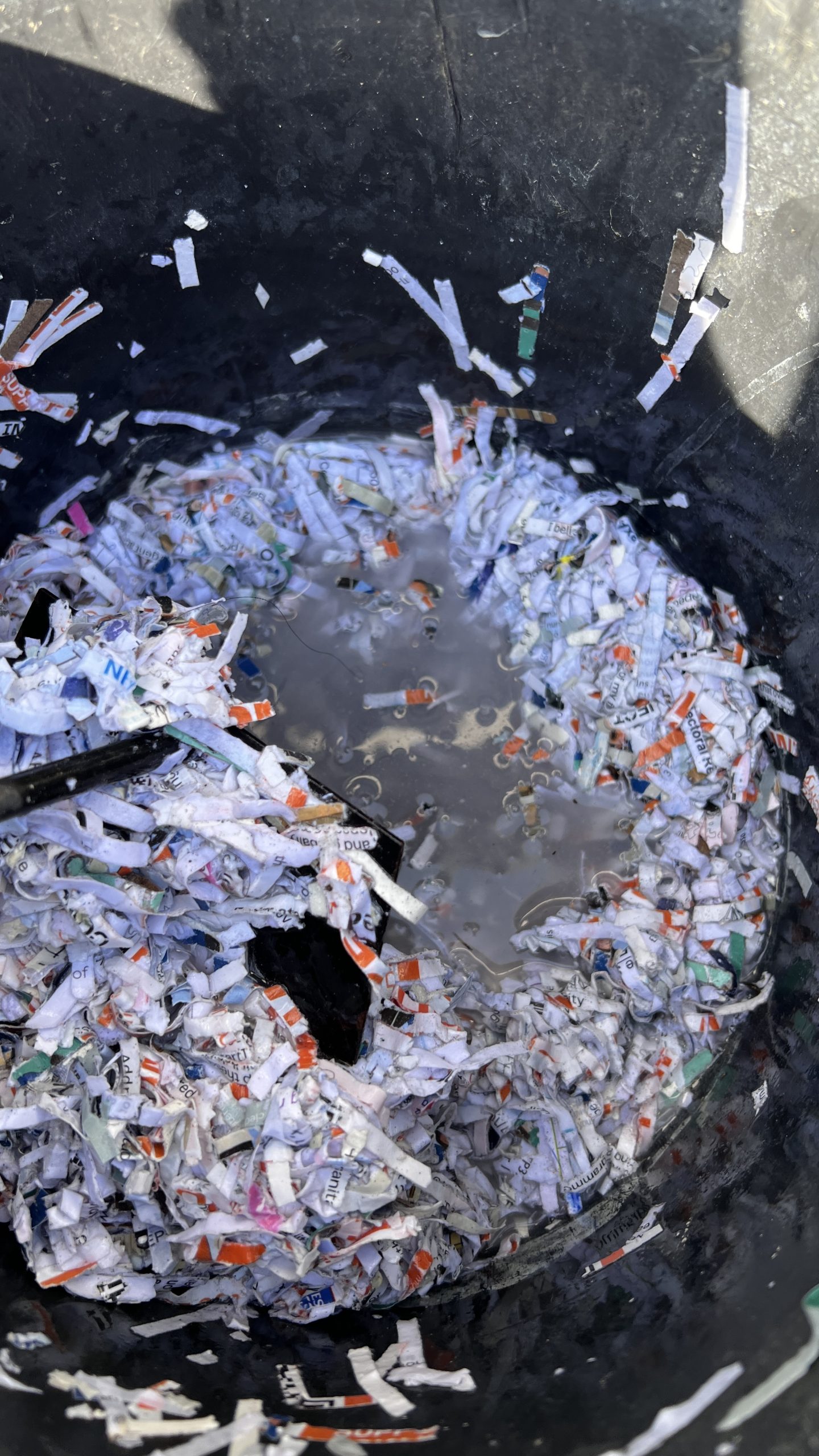
When Nish visited Kenya last year for his sanitation pilot project, the experience highlighted both challenges and opportunities in sustainable construction.
One pressing issue was the disregard to excavated soil and reliance on traditional brickmaking methods, which often contribute to soil degradation in rural areas that are vital.
This sparked an important question:
Could we support local businesses in making sustainable bricks using construction waste instead?
Fast forward to this week, and Nish has been testing different brick compositions—starting with household waste and planning to expand to plastics, soil, clay, and wood.
While this method may not be immediately viable for our rural community projects, it represents an exciting innovation that could shape future developments with the right support.

The Problem with Traditional Brickmaking
🚨 Soil Degradation: Traditional clay bricks require large amounts of topsoil, stripping land of its natural fertility and making it harder for communities to grow food or sustain agriculture.
🔥 High Energy Use: Many bricks are fired in kilns that consume significant amounts of wood or coal, contributing to deforestation and carbon emissions.
🏗️ Cost & Accessibility: In rural areas, traditional bricks often need to be transported over long distances, making them expensive and unsustainable.
An Alternative Approach: Bricks from Waste
By repurposing construction and household waste into compressed bricks, we could:
♻️ Reduce Landfill Waste: Turning plastic and organic waste into building materials helps clean up the environment while providing a valuable resource.
🌱 Preserve Soil & Ecosystems: Using alternative materials prevents the depletion of agricultural land.
🏠 Empower Local Businesses: Small-scale brickmaking operations could thrive using local materials, keeping costs low and benefiting communities directly.
💡 Lower Costs for Sustainable Housing: Affordable bricks mean lower construction costs, making it easier to develop resilient community spaces.

Where Do We Go From Here?
This week’s experiments are just the beginning. Nish is testing different materials and techniques to refine the process and identify what works best. With the right support from individuals like you, we could explore new ways to make sustainable brickmaking a reality in the future.
Want to be part of the journey?
✔ Donate to help us research and develop sustainable building materials.
✔ Share this story to spread awareness of the potential for change.
✔ Get Involved – whether you have skills, expertise, or ideas, we’d love to hear from you!