
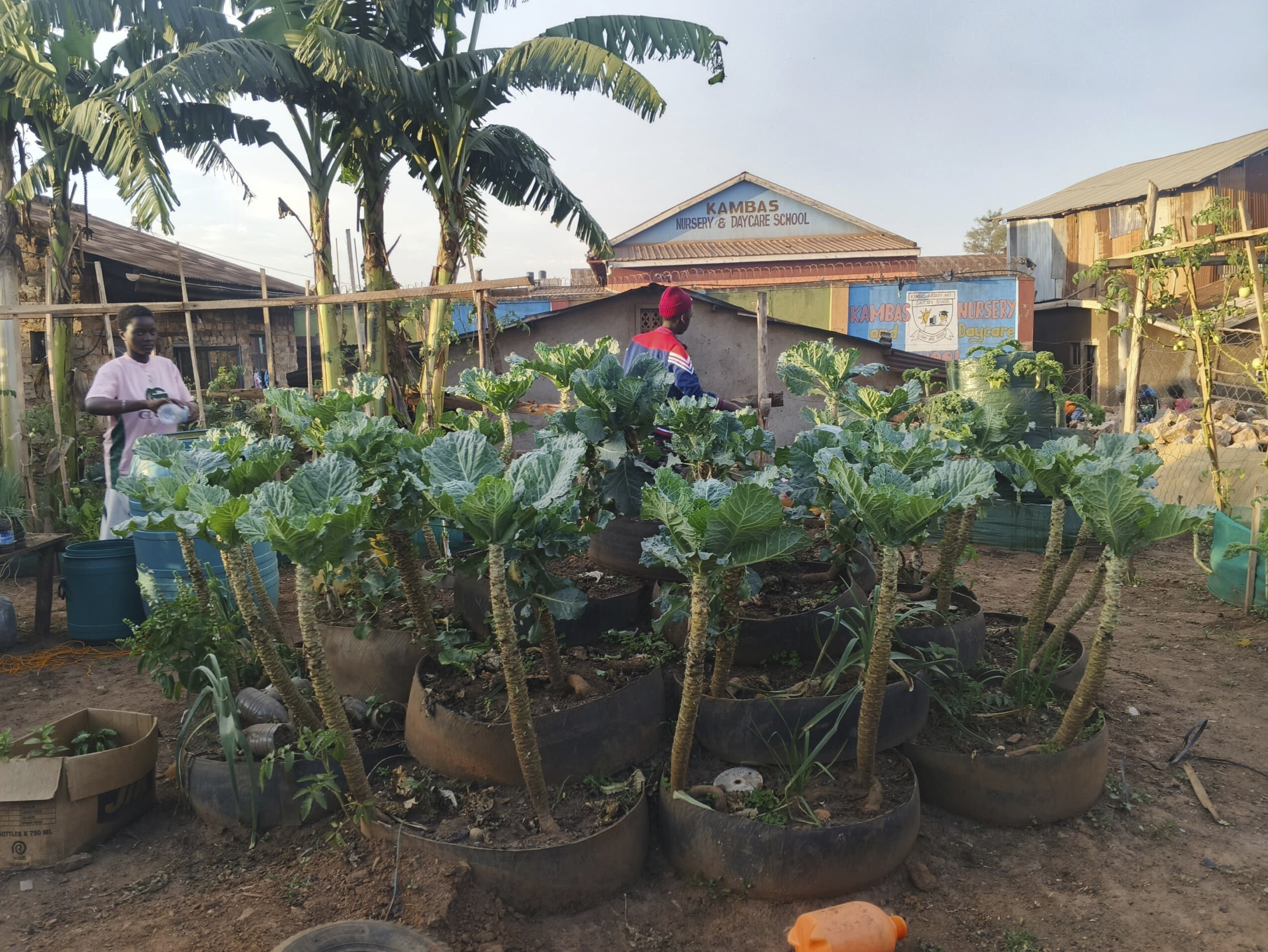
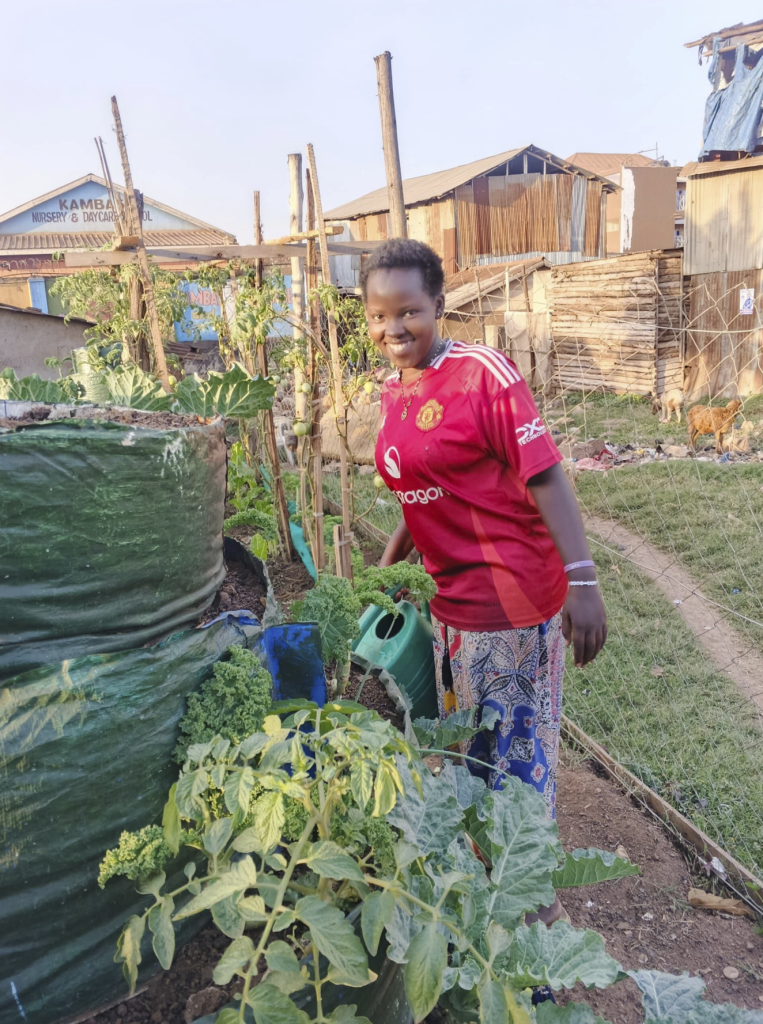
Through urban food growing, We are helping a project in Bwaise, Kampala, set up by young women who were
previously participants in a programme. The project generates income for young women living in the slums and
combats food insecurity. Our support will be helping with:
- Water Irrigation
- Urban Farming
- Income Generation
It is not just about growing, it is about supporting future generations and strengthen food and income security.
550
People Impacted
Uganda
Bwaise
Water Irrigation and Farming
Type
June 2026
Date
We are supporting…
Challenge 1
high youth unemployment, especially for young mothers: In the slums of Kampala, huge numbers of young people are out of work. There are very few jobs available and many girls and women rely on informal jobs or sex work to earn a living.
Our situational analysis carried out in 2021 found that as many as 60% of women in the slums are reliant on informal employment, like food vending or washing clothes. Across Kampala as a whole, 67% of the population are either unemployed or underemployed (Renzaho et al, 2020) – and 88% of Kampala’s unemployed residents are aged between 15 and 35 (IOM, 2017).
In particular, young mothers and survivors of sexual violence often face stigma when trying to find work and are forced out of school without the skills to earn a living, leaving them unable to support their families.
Challenge 2
ood insecurity and hunger: Many families in the slums experience food insecurity –
88.5% of women in Kampala’s slums are food insecure (Nantale et al, 2017), and similarly in our own situational analysis in 2021, 97% of 200 households interviewed reported experiencing hunger or lack of food. Food costs have increased by 400% since 2020, and many people struggle to grow their own
food in crowded urban areas.
These needs are addressed through our project:
- A small urban farm in Bwaise
- Grows and sells affordable, organic vegetables to over 50 low-income urban families
- Reduces food insecurity in the local area
- Supplies local restaurants, grocery stores, schools, hospitals and selling to local market traders.
Local Insight
In the slum areas of Kampala, Uganda’s capital city, child motherhood due to sexual violence is very common – with 60% of girls reporting sexual violence during lockdown.
Child mothers and sexual violence survivors face an impossible situation, struggling to access healthcare, education or training – they are shamed across the community, including at health facilities, and forced to drop out of school without the skills to earn an income to support their families.
The slum areas of Kawempe Division are some of the poorest, most densely populated parts of the city. In Bwaise slum, thousands of families subsist on less than 50p per day. More than 90,000 people live without basic services such as water, shelter and sanitation. 76% of households do not have access to private toilets. The residents regularly experience severe flooding, especially in the rainy season.
Many of those living here are refugees who have fled violence in South Sudan, or children trafficked from Karamoja in the East of Uganda, including for sex work. Life here is characterised by drug and alcohol abuse, crime and poverty. Up to 40% of households are involved in sex work.
The project provides jobs (full time/part time/contract) and builds skills for unemployed young people, especially girls, as well as creating indirect income generation opportunities. The project has transformed garbage dumpsites and other underused urban areas into green spaces and productive growing areas – restoring the ecological value of the neglected land.
Three in four children here drop out of primary school, often leaving to earn a living but without the knowledge and skills to do so. Youth unemployment, already high before the pandemic, has risen sharply since and many girls are forced into dangerous situations. HIV levels are very high and – shockingly – over 60% of girls in Kampala’s slums experienced sexual violence during lockdown. The number of child mothers in Kampala’s slums has soared as a result. Girls who become pregnant face significant stigma and struggle to return to education or access training.
Long Term Resilience
By working with Sherry’s Specials Initiative at this early stage through provision of equipment and seed supplies, we are building their capacity and helping establish strong foundations for long-term growth and sustainability.
The business model works – the urban farm is already generating income towards organisational running costs through regular sales to local families, fruit and vegetable vendors, restaurants, schools, and health facilities. Customers consistently provide positive feedback on the quality, affordability, and freshness of the organic vegetables, and current demand outstrips supply.
Provision of the drip irrigation kit and seed supplies through a grant from Kula Foundation will mean the team are able to increase the amount of produce grown, to meet the increasing demand – this will increase sales and income, building future sustainability. The team also has plans for further expansion, including taking on new growing sites, which will also significantly increase yields.
Awamu and our sister organisation Tusitukerewamu will continue to work closely with Sharifah and the team at Sherry’s Special Initiative as the business grows and develops. Sharifah has been part of our programmes for many years and is a volunteer community mentor for other marginalised girls – showing the ‘ripple effect’ of our programmes, as previously marginalised young women become leaders and role models in their communities.
Our team of community mentors, many of whom run their own small businesses, will also provide ongoing support and practical business guidance to Sharifah and the wider team through mentoring, helping to sustain the benefits of this project.
Community Engagement
This project has been wholly led by our grassroots partners Sherry’s Specials Initiative, a small organisation set up by Namazzi Sharifah and her team, all of whom come from and live in Bwaise. Sharifah was previously supported through Awamu’s programmes, and she is currently working with us as a volunteer community mentor to help other girls in her community.
The team at Sherry’s Specials Initiative have created the enterprise and successfully piloted it with a small grant from Plan Uganda and we are now working closely with them to help them continue and expand. The team have planned next steps for the organisation and requirements and shared these with Awamu.

Social Impact
Community relationships will be strengthened through this project. We sell our produce, at a fair price, to schools, hospitals as well as local restaurants, grocery stores and local market traders who will then in turn sell on the vegetables we produce – creating further income generation opportunities and economic networks.
The project will also improve wellbeing by reducing food insecurity. Low income families will benefit from access to affordable, organic vegetables, while by providing employment for young people the project increases family incomes and ability to afford food

Economic Impact
The project will provide livelihood benefits for the marginalised girls and other young people employed
at the urban farm through contract, part-time, and full-time positions, who would otherwise face
extremely limited opportunities. Expansion of the farm will increase growing capacity and lead to more
employment opportunities for young people.
Self-reliance is built through the training provided through the project. Marginalised girls will gain
practical expertise in urban farming, food growing and sustainable agriculture – transferable skills that
could enable them to establish their own small-scale enterprises in the future or find employment in
this sector.
The project enhances local economic activity by creating supply chains within the community. By
providing wholesale produce to local vegetable and greens sellers, the project indirectly employs
additional community members and keeps money circulating locally. Local restaurants, grocery
stores, schools, and hospitals buying organic vegetables creates reliable demand that then supports these economic networks.

Environmental Impact
The project transforms garbage dumpsites and other underused urban areas into green spaces,
productive growing areas for organic vegetables like sukuma, spinach, onions and tomatoes, which
restore the ecological value of the neglected land.
Organic vegetable growing will protect soil health and prevent contamination of water sources with
chemicals, like pesticides or fertilisers. Flooding is a huge issue in Bwaise in the rainy season, and the
project will support flood mitigation in areas where water would normally build up. Rainwater tanks,
plants and soil will absorb rainfall, and reduce surface run-off.
In Bwaise waste management is a huge problem (as residents have to pay to have their rubbish collected), so our future plans to collect organic kitchen waste for composting, and waste plastic for reuse in the gardens will reduce informal dumping, lower waste-burning, and clear open drains. It will contribute to cleaner surroundings, reducing flooding and improved physical and mental wellbeing – while demonstrating the power of environmental care and recycling to improve community life.
We would like to thank our Grant Partner Ground Team Awamu